What is Happening in Gaza and Venezuela?


War in Gaza plastered headlines for much of the past 3 years. Until it didn’t. By no means was this war unimportant- Israel has killed 72,000 Gazans; damaged or destroyed 90% of Gazan homes; and blocked supplies of food and water to devastate all 2.4 million Gazans in a famine. As a result the 140-mile square of land called the Gaza Strip, a Palestinian territory, was virtually uninhabitable. A UN Commission of Inquiry says Israel has committed a genocide. Israel began its invasion and blockade of Gaza in October 2023, after an attack by Hamas, the governors of Gaza, killed 1,200 of its own civilians, and took 251 individuals hostage. Throughout the conflict, Israel was continuously supported by the United States- in the form of $18 billion worth of military aid according to Brown University, and 15,000 bombs according to the Wall Street Journal. This support, combined with acts of inhumane genocide by Israel, provoked much uproar among the left across the globe. In Britain, politicians such as Zack Polanski, Jeremy Corbyn and Zarah Sultana all opposed Israeli action- as well as some progressives in America, joined prominent politicians across Europe and beyond. Public opinion also was favourable to the Gazans- 86% of all global protests related to the conflict were pro-Palestinian, said nonprofit ACLED. At least 54,000 articles were written about the conflict, and media coverage extended to social media, especially among a young generation- making this war extensively covered by the media. University campuses saw frequent pro-Palestine demonstrations. More than double Americans under the age of 30 were more sympathetic to the Palestinians than the Israelis. For my generation, Gaza is our Vietnam.
Months after the Americans brokered a ceasefire between Israel and Hamas, President Donald Trump intervened in Venezuela. In early January 2026, the US captured, some say kidnapped, Venezuelan President Nicolas Maduro. Afterwards, he was flown out of the nation, transferred onto an American ship and flown to New York. Since his arrival in the United States, Maduro has been held in a jail cell in Brooklyn. During Maduro’s regime, thousands were killed in extrajudicial executions and a hyperinflation crisis featured a rate of inflation of 1,000,000%. Trump has always held contempt for Maduro and his regime- during his first term, he said that he wouldn’t rule out military action as an option in Venezuela. The US President blames Maduro for the fact that hundreds of thousands of Venezuelans have entered the United States- just a fraction of the 8 million who have fled Venezuela during the Presidency of Maduro. Furthermore, Trump accredits an influx of drugs- particularly fentanyl and cocaine- into the United States to Venezuela, also evident by his proscription of two criminal groups as terrorists. After the capture of Maduro, Trump promised to make use of Venezuela’s vast oil reserves- the largest of any nation on Earth- which he believed had been under-utilised by Maduro, and could enrich the Venezuelan people. The US intervention in Venezuela is clearly illegal under international law. Article 2(4) of the United Nations Charter was violated because it prohibits the use of force in international relations. Attempts to justify the intervention under US law are also false, because the country's law holds no validation outside of the US. However, January’s intervention was quickly overshadowed.
Given both of these locations hold intense political and economic resources, the lack of coverage- partly driven by war in Iran- is worrying. Therefore, in this article, I’ll cover what has happened in Gaza and Venezuela since October and January. Is Trump’s peace plan in Gaza truly a ceasefire? By how much has the regime changed in Venezuela? What happens next?
Gaza
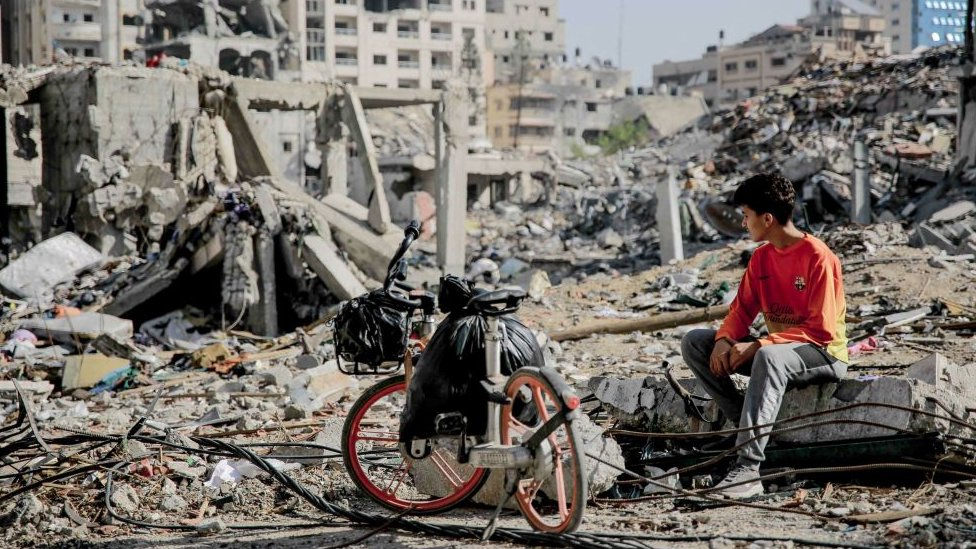
On 9 October 2025, Israel and Hamas agreed to the Gaza Peace Plan- nicknamed Trump’s 20-point peace plan- brokered by US President Donald Trump alongside other Arab nations. Soon after, Hamas transferred the remaining 20 hostages back to Israel, in accordance with the agreement. Next, Hamas gradually transferred the remains of dead hostages, despite Israel claiming that a coffin handed over by Hamas on Monday did not contain a hostage, rather somebody else. After Israel continued to pressure Hamas to fulfill its promises, all hostages, dead and alive, were transferred back to Israel. There are no remaining hostages in Gaza.
President Trump’s ego has remained central to his strategy post-war Gaza. In phase two of the Gaza Peace plan, he created the “Board of Peace.” Initially an international body which would administer Gaza after the war, it is now an alternative to other world peace bodies. Tony Blair- who has extensive experience in maintaining peace in the Middle East- Jared Kushner- son-in-law of Donald Trump- and Steve Whitkoff now make up a smaller Board within the organisation called the Gaza Executive Board. So far, the Board has done little to rebuild Gaza. Trump altered his original suggestions to instead create a de facto replacement for the United Nations- the body which Trump has consistently criticised. Now, countries are members of the Board of Peace for a three-year term in exchange for a fee of $1 billion, or £740 million. Currently, 27 countries are Members of the Board of Peace, whilst dozens of others are Observers. In February, nine member states pledged to give $7 billion worth of aid towards relief efforts in Gaza, and the United States pledged to give a further $10 billion. However, these are pledges, and many of the countries who vowed to give money- including the UAE, Saudi Arabia, Qatar and Bahrain- are all victims of attacks by Iran in the ongoing conflict. Therefore, they may be unable to give this aid because of the devastation they are currently facing. Western governments disapproved: the UK’s prime minister and foreign secretary were both deeply concerned about the role of Russian President Vladimir Putin in an organisation dedicated to establishing peace. France, Germany and Spain also all rejected their invitations. Broadly, the Board of Peace is not a serious answer to rebuilding Gaza. Because there has been little progress, and the Board is made up of individuals and nations who have perpetuated war, not peace, the Board is not a serious way to rebuild Gaza. Instead, it represents an egotistical attempt by Trump to create a legacy.
Humanitarian aid began entering Gaza after the Peace Plan was agreed. A convoy of aid trucks carrying essential food, medicine, and drinking water entered in mid-October. Gradually, more aid began to flow through the border crossings, and in November, the New York Times reported that 800 aid trucks were entering Gaza on a daily basis. In February, the Rafah Border Crossing, one of a handful of ways to leave Gaza- and the only way via Egypt- was opened. However, the Crossing was closed earlier in the Iran conflict.
The situation on the ground remains ugly. The vast majority of Gaza’s buildings remain damaged or destroyed, meaning families still continue to live in harsh conditions in tents and other forms of makeshift accommodations. Flooding and rain over the winter mean that 800,000 people living in temporary shelters are at risk of flooding, according to the UN. Whilst malnutrition rates have slightly decreased, Gaza is still in desperate need of food according to the DEC.
In conclusion, Trump’s Peace Plan is not a ceasefire. Israel has continued airstrikes, shelling, and gunfire. As a result, 673 Palestinians have died since the Peace Plan was signed. Whilst there have been some improvements- the return of Israeli hostages, temporary reopening of the border crossings and a slight reduction in malnutrition- they do not nearly resemble the end of the Gaza War. Instead, President Trump has used the war as an opportunity to advance his own interests through the creation of the Board of Peace. Meanwhile, a new conflict rages in the Middle East and Iran. Attention has been distracted from the ongoing humanitarian crisis in Gaza. The Gaza War needs a proper solution.
Venezuela

Former Venezuelan President Nicolas Maduro, and his wife Cilia Flores, are being held at the Metropolitan Detention Center in Brooklyn. During his time in Brooklyn, he has been held in solitary confinement to prevent attacks by other Venezuelan inmates- reportedly screaming every night “I Am the President!” in a cell that is 3 meters long by 2 meters wide. This illustrates the psychological damage caused by a drastic fall from power. Upon his arrival in Brooklyn in early January, Maduro pleaded “not guilty” to all four counts against him today, including drug-terrorism conspiracy, cocaine-importation conspiracy, and possession of machine guns and destructive devices. Maduro made another court appearance in March, but remains in the Detention Center in Brooklyn. The case is ongoing, and Maduro’s lawyer Barry Pollack said he anticipated voluminous and complex litigation over what he called his client's "military abduction."
The US seized multiple oil tankers carrying sanctioned Venezuelan oil after the capture of Maduro. Among those seized were the Marinera, M Sophia, Olina, Veronica and Sagitta.
Meanwhile, the US government is warming towards Venezuelan President Delcy Rodriguez. As the Vice-President under Maduro and his immediate successor, she is not the regime change which the US had pictured. Within hours of Maduro’s capture, which she described as a kidnapping, Rodriguez demanded proof that Maduro was alive. Currently, she still refers to Maduro as the official President of Venezuela. Tensions began to defrost when the Venezuelan government released nine of its political prisoners- prompting Trump to cancel another wave of attacks. Rodriguez has separately met with CIA director John Ratcliffe and US energy secretary Chris Wright to discuss economic collaboration and investment in Venezuela. Recently, the US government recognised Delcy Rodriguez as the acting President of Venezuela- in contrast to the EU, who don’t- and the US has removed sanctions on Rodriguez.
Oil has been one key objective of the Trump administration in Venezuela. Venezuela is home to the largest known reserves of oil in the world that are five times larger than the United States’s. As a climate change denier and supporter of oil, President Trump hopes to begin large-scale oil production in Venezuela. However, one major roadblock to that fantasy was the Venezuelan government- who had nationalised the country’s oil industry and gave the state oil company PDVSA majority control over operating oil projects. In January, Rodriguez and the Venezuelan legislature approved a bill which would allow private firms to operate oil fields if they had approved contracts. This also invites foreign firms to begin investment into Venezuela and its oil. Rodriguez announced that her government had received $300 million from a US sale of 80 million barrels Venezuelan oil in January- which is part of an oil deal between the US and Venezuela worth $500 million. Reuters recently reported that Chevron and Shell are close to agreeing the first big oil deal with Venezuela since the capture of Maduro. Other companies are more skeptical, partly as a result of the high density of the oil, making it expensive to produce, and meaning that it sells for little.
Venezuela appears to have both changed and to have continued on its path of authoritarian rule. A recent UN fact-finding mission found that Venezuela's repressive state remains fully operational after the capture of Maduro. Venezuela expert Laura Vidal said that the release of political prisoners is extremely slow, whilst the “revolving door” of political prisoners continues, just like deaths in custody and torture. From a human rights perspective, very little in Venezuela has changed. The privatisation of Venezuela’s oil suggests the country is transitioning away from socialism, a transition that some Venezuelans may oppose. Some Venezuelans may also oppose the US intervention and restoration of relations between Venezuela and the US. Ultimately, it is too early to judge whether Trump’s proposed $100 billion investment in the Venezuelan oil industry, from both the public and private sector, will come to fruition. However, the reluctance from many oil companies remains obvious, making a proposed transformation unlikely. The results of President Maduro’s trial in the US will decide the future of Venezuela. Democracy may not be returned for a long time.

Meanwhile, another storm is brewing in Latin America: Cuba. The nation ruled by a communist dictatorship since 1959 is the next which President Trump has his eyes on. Even the President admitted it when he said Cuba is “going to be next.” Earlier in 2026, the Trump Administration blocked deliveries of Venezuelan oil to Cuba carrying up to 35,000 barrels of oil per day. As a result, Cuba faces a shortage of fuel, electricity, and basic necessities including food, water, and medicine. Even after an aid mission to Cuba, which brought attention to the island by featuring social media commentator Hasan Piker, US intervention looks increasingly likely. And when that happens, Gaza and Venezuela will fall off the front page once more.


Well thought out and well written, thank you.
Thank you Civibus magazine for your five excellent articles on current affairs. It is refreshing to read your posts, in that they provide a good informative read, concise and comprehensive in giving the past history to international and national events concerning us today.