A Guide to German Politics


President Trump is pursuing global instability without an end. Earlier this year, he said NATO troops “stayed a little off the front lines” in Afghanistan. Trump mocked British prime minister Sir Keir Starmer for “talking to his team” and French President Emmanuel Macron because “[his wife] treats him extremely badly.” He has threatened withdrawal from NATO. Meanwhile, Russia has continued its violent and abhorrent invasion of Ukraine, hiking energy bills and challenging security in Europe for the first time since the Second World War.
At such a time of chaos in America, the UK should seek an alternative to its age-old "special relationship.” The most credible replacement would be a much closer relationship with Europe. Geographically and economically, Europe are our closest neighbours- the EU accounts for 41% of UK exports. Militarily, the UK has shared a history of collaboration with Europe as a member of NATO. Tighter relations with the continent is the only logical path to a secure Britain amid international turbulence.
The public agree- almost every opinion poll since late 2021 has suggested the UK would vote to rejoin the EU, with the most recent polls suggesting a lead in the double-digits. Support for rejoining the EU is shared by the Greens and Liberal Democrats, as well as the prominent nationalist parties in Scotland and Wales. Seemingly, the prime minister agrees. Last May, his government signed an agreement that reduced red tape for exports between the UK and EU, and built closer ties with Europe. Whilst this deal is largely insignificant, boasting economic advantages of just £9 billion over 15 years, it portrays a larger “reset” in Anglo-continental relations. During the ongoing Iran conflict, Starmer has announced that he will pursue a closer defence partnership with Europe.
Despite both public and political support for Europe, Britons know very little about it. In a recent YouGov poll, measuring the most famous foreign politicians. 86% of Brits recognised the name of the French President; 37% recognised the Italian prime minister; 26% recognised the German Chancellor; 25% recognised the Spanish prime minister. Given Spain is the most visited country by Brits, the last figure is surprisingly low. In the above YouGov poll, 6 of the 10 most recognised foreign politicians are Americans. Does this mean that the British media invest too much attention in American politics?
Previously, I have explored the politics of France and Italy. In this article, I’ll explore the politics of Germany by explaining its electoral processes, government and political past and future. In future articles, I will cover Spanish politics.
Politics

The Federal Republic of Germany is the most populous country in Europe, with 83 million inhabitants. Its GDP of over $5 trillion makes the German economy the largest in Europe.
From 1933 until 1945, Germany was governed by the National Socialist German Workers' Party (Nazis.) Following Germany’s loss in World War II, disagreements among the Allied Powers regarding Germany's future and a fragmented political landscape resulted in the division of Germany into East and West. The West freely elected a capitalist government, whilst the East was run by a communist one-party state. The West was a founding member of the European Economic Community (EEC), later evolving into the European Union (EU), while the East was part of the Warsaw Pact. In 1990, German reunification meant the East rejoined the West. German politics is governed by the nation’s constitution, styled the Basic Law.
The Bundestag is the lower house of the German Parliament. It scrutinises the government’s work, and decides on the Federal Budget and deployments of the Federal Armed Forces outside Germany. All federal legislation in Germany must earn the consent of the Bundestag to become law. There are 630 members of the Bundestag. All German citizens aged over 18 are able to vote. Germany uses the mixed-member proportional system to elect these individuals, which is also used in Scotland and London. This means voters cast two ballots.
The first is for an individual to be their local MP to represent a constituency. The first-past-the-post system is used so the candidate who wins more votes than any other candidate, wins. Recent reforms mean, to sit in the Bundestag, the candidate must be part of a political party who won more than 5% of the nationwide vote. This means some constituencies do not return an MP to the Bundestag.
The second ballot is for a political party. Parties that receive at least 5% of the nationwide second vote are allocated seats relative to their share of the vote through the Sainte-Laguë/Schepers method. Each political party publishes a list of candidates who will represent their state (Land) if elected. Once each party's total number of seats has been calculated, these seats are divided among the party's Land lists based on the party's second vote in each state. Germany requires political parties to win at least 5% of the national vote to prevent smaller, often more radical parties, from entering Parliament.
The Bundesrat is the upper house of the German Parliament. Its key role is to defend the interests of the Länder (Germany’s 16 states) at the central government level. Two approaches are taken to legislation- consent bills and objection bills. The Bundesrat votes on consent bills. They require the majority of Bundesrat members to approve so they can become law. Consent bills account for around 40% of legislation. This means the Bundesrat is less powerful than the Bundestag and is instead more comparable to the House of Lords. There are 69 members of the Bundesrat. They are appointed by Germany’s 16 state governments. All members from a particular state must vote in the same way on each vote.
The President of Germany is Head of State. His major responsibilities include appointing and dismissing the Chancellor and ministers, certifying and promulgating legislation, and representing the German state in formal occasions both domestically and internationally. It is precedent that he does not comment on or engage in day-to-day political affairs.
The German President is elected by an electoral college named the Federal Convention. The Federal Convention consists of all 630 Bundestag members and an equal number of members elected by the state parliaments. To win, a candidate must gain a majority of votes in the first or second ballot or a plurality in the third. Elections for German President occur every 5 years, whilst Presidents can serve a maximum of two terms in office. Frank-Walter Steinmeier has served as President of Germany since 2017.
The Chancellor of Germany is Head of Government. They are responsible for managing the government on a day-to-day level, establishing government policy, and representing Germany at events alongside other world leaders. Whilst observers have described the German political system as a “chancellor democracy,” alluding to the immense powers of the head of government, Germany’s Chancellor holds similar powers to their Italian counterpart. The Chancellor’s official office and residence is at the Federal Chancellery in Berlin.
The first responsibility of the newly-elected Bundestag is to elect a Chancellor. To win, a candidate must gain the support of the majority of the Bundestag. If no candidate achieves that level of support after two rounds of voting, then the President can accept a so-called "minority chancellor"- who would have the same rights as a chancellor elected by an absolute majority- or to dissolve the Bundestag and hold a new election. If a Chancellor resigns, dies or is removed from office, then the Bundestag must elect a successor. Friedrich Merz has served as Chancellor of Germany since 2025.
Government
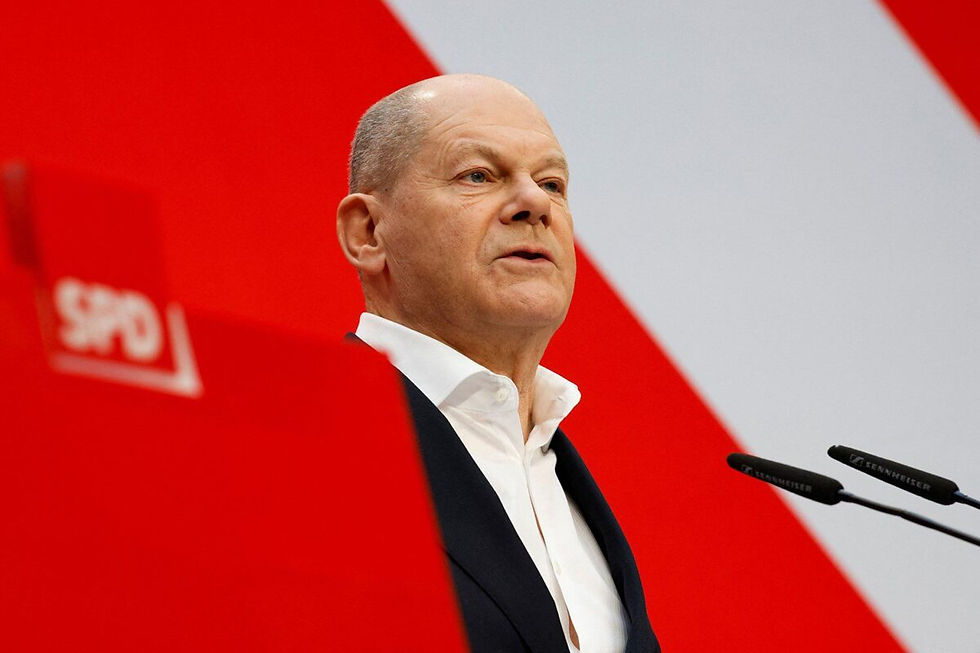
Germany’s last federal election was held on 23 February 2025. In November 2024, Chancellor Olaf Scholz dismissed FDP leader Christian Linder from his government, after Linder refused to compromise on debt rules. As a result, the SPD-FDP-Green coalition collapsed, resulting in Scholz losing a vote of confidence in the Bundestag. Eventually, the Bundestag was dissolved in late December so that a federal election could occur in February.
The German public responded with a resounding rejection of Scholz’s centre-left government. His party, the SPD, plummeted from first to third place, losing 9% of the vote. Meanwhile Scholz’s coalition partners, the Greens, lost vote share, whilst the FDP not only lost vote share, but its entire standing in Parliament.
The CDU/CSU, led by Friedrich Merz, won 28.5% of the vote, placing them first. Nicknamed “the Union”, the two Christian conservative parties form a political alliance in the Bundestag and abstain from competing against each other. The CDU operates in 15 of Germany’s 16 states, whilst the CSU solely operates in Bavaria.
The most striking image emerging from Germany’s election was its map. Alice Weidel’s AfD dominated the former East Germany, whilst Merz’s alliance was prevalent in the former West Germany. Given 39% of working-class and low income voters supported the AfD, the party’s success in the historically poorer East stands to reason.
In an astonishing showing, the Alternative for Deutschland (AfD) won second place. Following its establishment in 2013, the party secured the best result in its history. Founded with the intention of creating a conservative alternative to the pro-EU CDU, the AfD has gradually shifted rightward to advocate for “remigration” of immigrants from Germany, restrict the influence of Islam and stop government spending on refugees. The AfD’s xenophobic and Islamophobic rhetoric has led to the Central Council of Jews in Germany describing the AfD as an “extremist party” that “embodies Nazi ideals.” Alice Weidel, a lesbian woman who lives in Switzerland with her Sri Lankan wife, led the AfD to win 20% of the vote. Her grandfather, a prominent Nazi, was appointed by Adolf Hitler as a military judge.
To understand the extent at which the European Union relies on Germany’s membership, imagine an EU without Germany. The EU would lose one quarter of its GDP; its budget would be reduced by €13 billion euros; and Eurozone members would lose a power to bail them out amid economic turmoil. In return, Germany dominates the EU. Frankfurt houses the European Central Bank. Ursula von der Leyen, President of the European Commission, is the second German in the job. Germany is responsible for ⅓ of Europe’s manufacturing output. This means free trade disproportionally benefits the German economy.
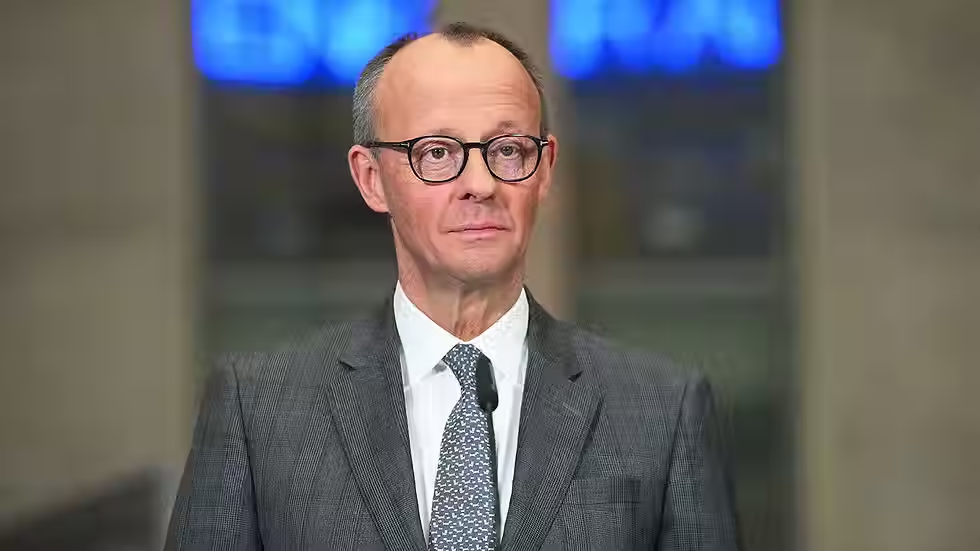
On 6 May 2025, 69-year-old Merz was elected Chancellor after two rounds of voting. In the first round, Merz failed to reach the 316 votes required to become Chancellor, falling short at 310. He was successful in the second round where he won 325 of 630 votes. Considering the CDU/CSU controlled 208 seats, over 100 short of a majority, they formed a coalition with the SPD. An informal agreement named the “firewall” among main parties states they should not co-operate with extremist parties. Therefore Merz’s centre-right alliance joined forces with the centre-left SPD to form a “Grand coalition.” Skeptics criticised Merz’s decision to join the SPD, arguing it symbolised the continuation of a party voters overwhelmingly denied.
Merz is wary of the United States. Before entering the Federal Chancellery, he had visited the US over 100 times and described former President Ronald Reagan as one of his role models. Following Vice-President JD Vance’s speech at the Munich Security Conference, where he declared Europe as the greatest threat to the US, Merz shifted his tone. Addressing a conference of young Catholics in March 2026, the German Chancellor said he wouldn’t advise his children to go to, get educated or work in the US. Merz’s comments reflect his wish to move German foreign policy away from the US.
He has prioritised defence as a major pillar of his government. In April 2026, Merz announced his aim to grow the size of the German military so that it becomes the largest “conventional fighting force” in Europe by 2039. Defence Minister Boris Pistorius’ strategy identifies Russia as the primary threat to German security, therefore he plans to grow the German military’s personnel to a total of 460,000 combat-ready troops. To fund the dramatic increase, Germany will increase its defence spend by €67 billion euros by 2029. Opinion polls suggest the boost has strong support from the German public.
Immigration propelled the AfD to its success in February 2025. Amid the refugee crisis one decade prior, nearly 1 million Syrians entered Germany to seek refuge, and were met with open arms by Chancellor Angela Merkel. In March 2026, Merz and Syrian President Ahmed al-Sharaa announced they hoped that 80% of Syrians living in Germany would return home following the fall of Assad. Little detail was specified regarding how the returns would work. In 2025, the number of asylum applications fell by more than half compared to the previous year.
Like former British prime minister Sir Keir Starmer, Merz flourishes on the international stage while suffering extensive unpopularity at home. Just 19% of Germans are satisfied with his performance. Morning Consult claimed this means Merz is the most unpopular leader in the democratic world. A series of policy and communication blunders, from borrowing hundreds of billions in his first major act as Chancellor after campaigning as a fervent fiscal conservative to a tendency towards impulsivity have made Merz’s initially dire position appear nearly untenable.
In September, the states of Saxony-Anhalt and Mecklenburg-Vorpommern, elect their state government. The AfD lead polls by double digits in both states. State governments have complete control over policing, education and public housing. This places the AfD tangibly close to power, although the firewall policy may prevent them gaining it.
Conclusion
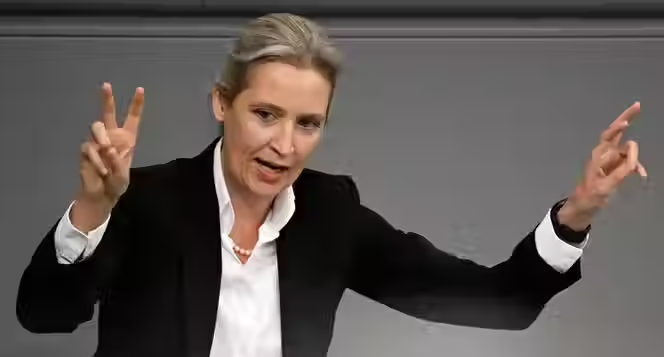
During the Greek debt crisis, Germany’s rescue fund meant the future of Athens was decided in the German Bundestag. Since 2010, stakes have soared. Russia invaded Ukraine. The US pivoted away from Europe. Now the future of the entire continent depends on whether the AfD can erode the CDU’s grip on West Germany. If they can, then post-war Germany’s reputation as a beacon of stability is shattered. Recent polls place the AfD as the most popular German party with support from 28% of voters, leading the CDU by six points. The German establishment’s last hope appears to be its firewall.


keonhacai dạo này thấy mọi người nhắc hoài nên mình cũng bấm vào nghía thử cho biết. Mình không đọc sâu nội dung đâu, chỉ lướt xem trang họ làm giao diện kiểu gì thôi. Cảm giác đầu tiên là nhìn khá dễ chịu, không bị rối mắt, mấy phần thông tin được chia thành từng khối rõ ràng nên kéo xuống vẫn theo dõi được. Mình cũng để ý menu đặt ngay chỗ dễ thấy, bấm qua lại vài mục là hiểu mình đang ở đâu, không phải mò. Nói chung kiểu trình bày này hợp với ai chỉ muốn nhìn nhanh rồi nắm ý chính, không cần căng não. Mình thích nhất là các khung bảng hiển thị…
Bài viết nhẹ nhàng mà dễ áp dụng, cảm ơn bạn đã chia sẻ. Đoạn bạn nhắc viết vài điều biết ơn mỗi sáng đúng cái mình đang băn khoăn dạo này. Mình cũng hay xem thử mấy nền tảng giải trí online chỉ để quan sát bố cục, cách chia mục và hiển thị dữ liệu, nên gom lại thành một trang cho tiện xem lại. Ai cần tham khảo thì ghé https://www.maanation.com/Soicauxsmbpro
Mình xem xổ số kiểu cho vui là chính, coi như thêm chút giải trí chứ không đặt nặng chuyện phải trúng. Trước đây nghe người ta nói “cầu” nọ “cầu” kia mình cũng nửa tin nửa ngờ, nhưng theo dõi một thời gian thì thấy thỉnh thoảng có vài dạng trùng lặp làm mình chú ý. Mỗi khi đọc mấy bài nhận định, mình hay ghi lại vài ý ngắn rồi chờ kết quả để tự kiểm tra xem có phải mình đang tự tưởng tượng ra quy luật không. Dạo gần đây, đôi lúc mình ghé https://soicauxsmb.io/soi-cau-atrungroi-mb.html để có thêm chủ đề tám chuyện với bạn bè. Có bữa trúng được chút thì vui, nhưng cũng không ít…