Could Scotland Experience its Biggest Political Earthquake for Decades?

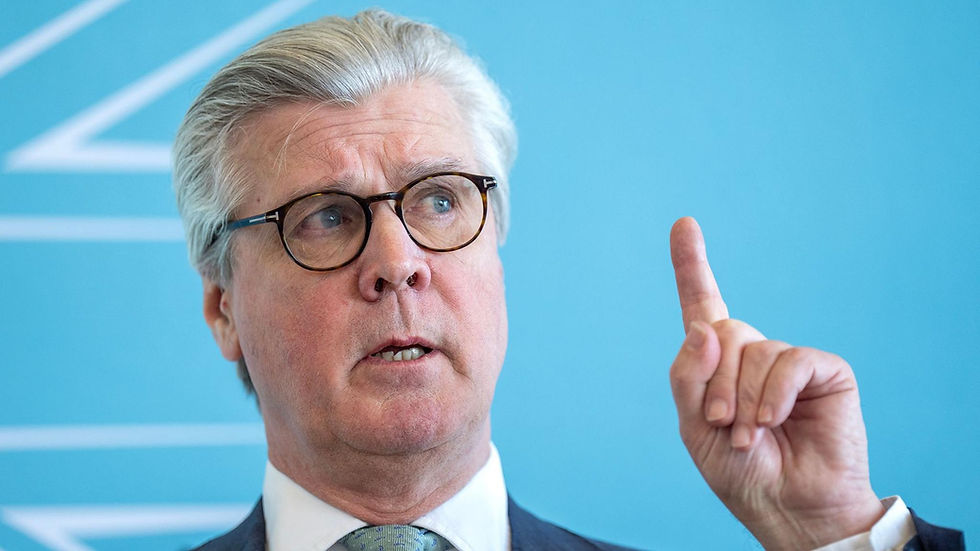
On Thursday, Malcolm Offord unveiled Reform UK’s manifesto for the upcoming Scottish elections. In May, nationwide elections across Scotland will happen for the Scottish Parliament. Offord’s speech was ambitious. He wanted to present the party as one that would capture Scotland and elevate it to the best place in the union- by exploiting its oil and natural gas in the North Sea. More drilling in the North Sea is in direct contrast to official UK government data, which estimates that 93% of oil and gas in the North Sea has already been extracted. Is Reform proposing to reinvigorate Scotland, or generate more profits from the climate deniers and oil executives who gave them 92% of their funding? If the party really wanted to accelerate Scottish growth, perhaps they would build more wind farms, because experts say that the North Sea’s shallow waters and high winds make it one of the best places on the planet for wind power.
Regardless, Reform have made their hopes for governing clear. Meanwhile, the other Scottish parties increase their hopes for Holyrood. Labour’s Anas Sarwar might not recover from his quarrel with Prime Minister Keir Starmer- when he urged the Labour leader to go last month, amid mounting pressure over his judgement on Peter Mandelson. Recently, Sarwar has revealed that he has not spoken to Starmer since the feud. At the Liberal Democrat conference in Bournemouth last September, I witnessed its Scottish party leader declare that the party would overtake the Tories in Holyrood- so far it’s neck and neck. Miraculously, the SNP has recovered from its Humza Yousaf days, and are the favourites to win power in May. The SNP’s strong position is confusing, because the Scottish electorate have been crying out for change for a while- and Reform think they can deliver that change.
For many years, Scotland has been the last hurdle in Nigel Farage’s conquest of the United Kingdom. But are the tides starting to change?
In this article, I’ll analyse Reform in Scotland, ask if they can defeat the SNP, and the upcoming Holyrood elections more broadly, whilst also asking why the SNP is left-wing.
Reform in Scotland

Once upon a time, the idea of Nigel Farage leading Scotland was inconceivable. To an extent, it still is. But the tides certainly have shifted to the point at which Reform is a significant political force in Scotland- most opinion polls place the party either in, or battling for, second place for the Scottish elections in May.
During much of the 20th century, centre-right political movements in Scotland were popular- the old Unionist Party, an associate of the UK Conservative Party- produced two prime ministers in Bonar Law and Alec Douglas-Home. Notably, they won around half of the vote in Scotland in 1955. However, a gradual decrease of support for the party began in the 1960s, for which multiple factors can be considered. Primarily, the Scottish Tories lost support because they were considered as the party of the British Empire- an Empire which began to crumble during the 60s, losing the support of its Protestant voter base. A similar effect didn’t happen for Labour or other parties.
In June 2016, Scotland overwhelmingly voted to Remain in the European Union, and it was a eurosceptic Nigel Farage was the driving force behind the referendum. All 32 of Scotland’s local authority areas voted to Remain, including 62% of total votes cast. This meant that Scotland was the most pro-EU country of the United Kingdom- Northern Ireland was the only other country to join it. Scotland’s resounding refusal of Brexit made the country difficult terrain for the right to advance in. The country also rejected Boris Johnson’s Conservatives in 2019, under their “Get Brexit Done” manifesto, as the party was reduced to just 6 Scottish seats. Therefore, Reform’s current levels of support in the country are surprising.
Malcolm Offord leads Reform UK in Scotland, making him the “first-minister delegate” in the event that Reform wins Holyrood in 2026. Offord bought his way into the Conservative Party by donating £150,000 to the party. In exchange for his cash, the Tories appointed him as a Life Peer, and as a junior minister in the Scotland Office. Intriguingly, Offord was very supportive of net zero. After visiting the COP26 summit in Glasgow, he stated that the UK had the resources to transition towards a green economy, advocating for Scotland to be central to that mission, and that solar panels and wind turbines should be used in the country. Given Reform UK’s manifesto doesn’t advocate for more renewables, one asks, is Offord truly opposed to net zero, or is he acting purely for political office?
Within one day of Reform UK announcing its 73 candidates for the Holyrood, one has already been suspended. Stuart Niven was a councillor in West Dundee who failed to declare that he had directed thousands of pounds from a taxpayer-funded COVID loan into his personal bank account. This was devastating news for Reform, because Offord had stated that the party had “spent a lot of time vetting.” Furthermore, two other candidates have faced scrutiny for severely Islamaphobic comments. This raises questions about the legitimacy of Reform’s vetting. For what, and how, is it checking its candidates? For a party who pride themselves in reducing government waste, Niven’s actions are distasteful.
Reform UK says that it is determined to make Scotland the most successful part of the UK. To accomplish this goal, it will rebuild Scotland’s oil industry, cut income tax and reduce grants for net zero and quangos.
On the economy, Offord has stated that his day-one priority is a reduction in income tax. He will link Scottish income tax bands and rates with English ones, and hopes to reduce those tax rates. To fund this, QUANGOs (organisations which are funded by, but independent of, the government, and have a unique purpose) will have their funding slashed. Scottish public services are stronger than in England and Wales, and QUANGOs are central to their operation.
Reform UK’s policies in Scotland do not appear to be thought through. Scotland would be worse off, and suffer the long-term consequences over the following decades.
Why is the SNP left-wing?

The party that gave Scotland free university tuition, nationalised trains, and free prescriptions hasn’t always been left-wing. Many argue that it still isn’t. During its early years, it was essentially a “big tent” political party, in an attempt to attract voters from all sides of the political spectrum, but that began to change during the 1960s. Billy Wolfe led the SNP from 1969 until 1979, and he established the party’s social democratic philosophy by associating the party with trade unions. This made sense because Labour was the most dominant party in Scotland during the 60s, and any attempt to gain voters would require the support of left-wing voters.
Margaret Thatcher’s legacy in Scotland also became an influential factor. She introduced her controversial poll tax- the tax which eventually brought her government down- in Scotland before it was implemented in England. Thatcher’s clash with the miners in Scotland made her a hated figure among the working class, with some saying that she destroyed Scottish communities. Therefore, nationalisation and left-wing economics became popular in Scotland, meaning that the SNP’s platform gravitated towards it.
But perhaps the SNP is very left-wing at all- rather it is a broad church. Kate Forbes enjoys great prominence as the Deputy First Minister of Scotland and a former contender for the leadership of the SNP, losing to Humza Yousaf by around 4 points in 2023. She opposes homosexuality, same-sex marriage and abortion, in agreement with her Catholic religion. Figures like her are common in the party, and her strong performance in the 2023 leadership election make conservatism seem common within the SNP. If the SNP led Scotland to independence, it is likely that the SNP would be dissolved, and its progressive and conservative wings would flee to form their own nationalist parties.
*
Scotland uses proportional representation to elect members to Holyrood. There are 129 Members of the Scottish Parliament (MSPs) - 73 constituency MSPs and 56 regional MSPs. Scotland’s Additional Member System (AMS) means that voters have two votes. A voter’s first vote is for their constituency MSP. A constituency MSP represents one constituency and is elected using the first past the post system- similar to a Westminster MP. A voter’s second vote is for a Regional MSP- where they vote for a party, not a candidate. Regional MSPs represent one of the eight regions. Each region elects seven regional MSPs. Regional seats are allocated using the d’Hondt method in which the party’s regional vote total is divided by the number of constituency seats won in that region plus one. The party with the highest result gets the first regional seat, and the calculation is repeated until all seven seats are filled. In both regional and constituency ballots, only one vote is cast.
This system is also used in Wales, however the Welsh Parliament will be elected solely through a system similar to the Scottish regional MSP system at the May Senedd elections. Whilst multiple mainstream parties advocate for proportional representation for the Westminster Parliament, this system is not used in Scotland for UK-wide general elections.
Could Reform Defeat the SNP?

The SNP has ruled Scotland for the past 19 years. Once an outsider, insurgent political force, now a serious party of governance, the Scottish National Party is almost homogenous with Scotland. Strong tides of chaos among the SNP government have been replaced by calm waters, despite a chaotic 5 years. 3 first ministers, numerous British prime ministers, and global events have all changed since the last Holyrood elections. Scotland’s growth rate is minimal, the cost-of-living has skyrocketed, and the nation faces a health crisis. Voters are frustrated and angry, with ¾ of voters saying they want change, according to a More in Common poll. All of these factors suggest that a Reform UK victory, the outsider and insurgent force of British politics in the year 2026, is possible. But I think that it will be the SNP who will win the elections for the Scottish Parliament.
Opinion polling suggests an SNP victory. Whilst polling indicates a result notably worse than the prior elections, around 35% of voters say that they will support the SNP- over double the percentage who say that they support Reform. This was exemplified in a recent YOUGOV poll. Support for Scottish independence has increased, to the point at which polling aggregator Politico says that Scotland would vote to leave the United Kingdom by a margin of 3%. Brexit is among the many reasons why Scots are gradually favouring independence more. If Scotland left the United Kingdom, it could rejoin the European Union- which is perhaps the most viable way for Scotland to re-enter the EU, given that English politicians are stubborn to propose rejoining. As we have covered, Scotland voted to Remain in the EU by a huge margin. Aside from populist tactics deployed by nationalists to encourage voters to leave, frustration at Westminster is another factor. Keir Starmer remains the least popular prime minister since Ipsos began tracking approval ratings half a century ago- and such disapproval extends to Scotland. Coupled with 14 years of Conservative government which is universally recognised to have seriously damaged Britain, Scottish voters are disappointed by Westminster, and want to be governed closer to home. A Holyrood government led by the Scottish National Party, now acting as the only pro-independence party given Alba has recently stated they will not stand at the upcoming election, is the most obvious path towards independence. A referendum on independence can only be triggered by the UK national government, but the SNP say that Keir Starmer will essentially be forced- similar to David Cameron in 2014- to hold a vote if they win over half of the seats and votes in Scotland in May.
Whilst Malcolm Offord is leading a Reform party with a bold manifesto and the resources to win a campaign, Reform’s personnel is one of its biggest weaknesses. One questions how popular Offord, a Conservative until December, will be in a country where the Conservatives are largely disliked. Furthermore, the party’s candidates will be a liability. Voters toying with the idea of supporting Reform may be dissuaded by Stuart Niven’s dubious past, and it is possible that more revelations about Reform candidates will be released.
In conclusion, Reform UK will not win in Scotland in May. Their polling- estimated at around 16%- is nowhere near that of the SNP, and barely defeats Labour in the race for second place. A political earthquake- meaning a seismic shift in the political landscape- will not shatter the walls of Scottish politics. However, Reform’s rise in Scotland is certainly a shift worth watching, and one which indicates a lot about the future of Scottish politics.


The grifter keeps grifting, let's hope our Scottish friends send him back south, preferable to the middle of the English Channel. Let's hope he hasn't forgotten how to swim.