Labour: Two Years In


The first seeds of Civibus magazine were sown in July 2025. One year after Sir Keir Starmer was appointed prime minister having led the Labour Party to the third greatest victory in its history, I wrote, “I don’t know if the government will end the u-turning, but I do know the next year of the Labour government will be just as interesting as the first.” It was. Two years after Starmer entered Downing Street, he is preparing to leave.
Anti-immigration protests sparked in Epping in mid-July, before spreading across the United Kingdom to culminate in 150,000 individuals attending Tommy Robinson’s far-right Unite the Kingdom rally in September. The meteoric rise of Zack Polanski’s Green Party counterbalanced the sentiment over the summer, spurred on by growing discontent about vast inequality in Britain. Nigel Farage’s Reform UK continued their grip on the opinion polls, averaging at around 30%, as they prepared for a campaign to enter Number 10. One thing remains the same from last year- widespread hatred of Starmer’s government.
Weak, useless and incompetent were the three most common words used by voters to describe Starmer. This disdain has translated into electoral disaster. In May, Labour lost control of the Welsh government for the first time in its history, losing its title as the most popular political party in Wales since 1922, and plunged from first to third place in the Senedd. In England, Labour lost 1,500 councillors and control of 38 councils, including the party’s heartlands of Gateshead, Sunderland and Bradford.
After Labour’s catastrophic showing, pressure mounted on Keir Starmer to resign as party leader and prime minister. Junior ministers quit. Over 100 MPs publicly urged Starmer to resign. Many more did so in private. The writing was on the wall.
The trigger wasn’t pulled until Josh Simons, backbench MP for the constituency of Makerfield in the north-west of England, announced his resignation from Parliament so that Andy Burnham, mayor of Greater Manchester, could replace Starmer. As a result of the miraculous transformation of Manchester, Burnham has the highest popularity rating among all major Labour politicians in the country, according to YouGov. This has led to a desire for Burnham to return to Westminster to lead Labour among the party’s MPs. Burnham won the by-election, in spite of vast speculation about a tight race, to become MP for Makerfield with a majority of over 9,000 votes. He is now on course to become prime minister.
In the dying days of Sir Keir Starmer’s government, why has everything gone wrong? Were my predictions last July correct? What next for Britain?
Sir Keir Starmer: A Timeline
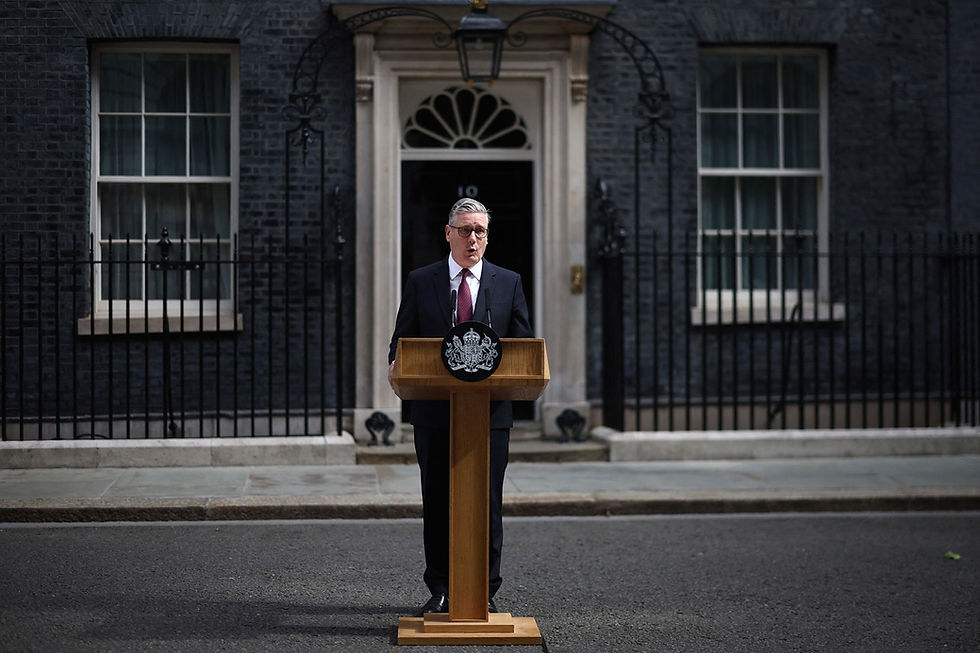
Keir Starmer was raised in a working class household in Surrey, becoming the first member of his family to attend university. He worked as a human rights barrister before serving as Director of Public Prosecutions from 2008 to 2013. Starmer was elected as an MP for the North London constituency of Holborn and St Pancras in 2015 and Leader of the Labour Party in 2020. After his election as Labour leader, his job- revive Labour after a devastating defeat under Jeremy Corbyn. Remarkably, Starmer led Labour to a landslide victory at the 2024 general election, winning over 400 seats. He was appointed prime minister of the United Kingdom on 5 July 2024.
The early days of Starmer’s premiership were pleasant. England were on the brink of winning the 2024 Euros. Starmer cancelled the Rwanda Asylum Plan, which transported four migrants to Rwanda at a cost of £700 million to the UK government, established the Border Security Command, and the Council of Nations and Regions. He and his predecessor Rishi Sunak exchanged friendly jibes at the despatch box.
Soon enough, reality caught up. England lost the Euros. Ministers discovered that their inheritance from the Conservatives was worse than expected. They piled onto political shows to rave about a £22 billion “black-hole” in public finances. In practice, this meant £22 billion worth of day-to-day government expenditure hadn’t been accounted for by the Treasury whilst the Conservatives were in office. Labour responded with doom and gloom.
Chancellor Rachel Reeves’ first major economic policy was the scrappage of the Winter Fuel Payment. This was well intentioned- Reeves would save £1.5 billion by reducing welfare to one of Britain's wealthier demographic groups- but poorly communicated.
In late August 2024, Starmer delivered a speech from Downing Street’s Rose Garden, where he warned of a fiscal and societal black hole, declaring “things will get worse before they get better.”
These two decisions, in retrospect, may have been the downfall of Starmer’s government. The portrait of a supine and torpid Labour government was painted. Voters would not return to support Starmer in their droves. They fled. Starmer enjoyed a net positive approval rating during his first month in office, before suffering with a net negative 20 points by the autumn.
Reeves delivered her first budget on 30 October 2024. Taxes went up. Another poorly communicated but well intended policy, the decision to halve agricultural property relief for farms worth over £1 million, branded as a “family farms tax,” was announced. The rate of employers’ national insurance, the tax paid by employers to hire, went up. As a result, business confidence fell. Despite remarkable investment in public services, so did polling.
An unstable White House released shockwaves across the globe. Consequently, the West prepared to increase defence spending. A reduction in foreign aid wouldn’t cut it. Reeves shifted towards reducing welfare, a task led by Work and Pensions Secretary Liz Kendall. The DWP secretary introduced her Universal Credit and Personal Independence Payment Bill in June 2025, which would tighten the criteria people have to meet in order to get Pips, and cut the element of universal credit which relates to sickness. Proposed savings amounted to £5 billion.

Protests among members of the public expanded. On the Labour backbenches, outrage. 120 MPs threatened to vote against the cuts.
Days before MPs voted on the bill, its most significant elements were removed by Starmer. A second u-turn was made just 90 minutes before MPs headed to the Commons to vote. As a result, Pips and universal credit claimants would continue to receive the same welfare check. This means the bill effectively didn’t save the government cash. If the government hadn’t reversed their decisions, then Starmer would have suffered one of the most humiliating defeats in the House of Commons. It didn’t. On 1 July 2025, a watered down Universal Credit bill passed its first reading by a majority of 75 votes.
The welfare rebellion by Labour MPs was the beginning of the end. No prime minister can ever govern effectively with a dejected approval rating among the public and disloyal among MPs. From that moment, Starmer couldn’t.
On 28 August 2025, Starmer faced another misfortune when The Telegraph reported his deputy prime minister Angela Rayner underpaid £40,000 worth of stamp duty on a flat in Hove. The conveyancing firm which assisted Rayner stated that they advise their clients to seek professional advice from accountants and tax professionals. As a result, the prime minister’s ethics adviser said Rayner had broken the ministerial code. Consequently, she resigned. Ironically, The Telegraph published an article titled “How to avoid tax on your second home” on the same day.
This provoked a cabinet reshuffle. In reality, it was more of a game of musical chairs. 12 cabinet ministers changed jobs. Yvette Cooper replaced David Lammy as Foreign Secretary; Cooper was replaced by Shabana Mahmood as Home Secretary; and Mahmood was supplanted by Lammy to become Justice Secretary and deputy prime minister. Given Rayner also served as Deputy Leader of the Labour Party, an election was held for that job too. Lucy Powell, MP for Manchester Central and staunch Burnham ally, defeated Starmer’s ally with a strikingly low turnout.
In autumn, a Labour conference. The main man- Andy Burnham. Speculation swirled around whether the Greater Manchester mayor would seek election to Parliament so he could challenge Starmer. He delivered a series of scathing interviews about Starmer, leaving many MPs to ultimately view him as unserious. The view by many commentators- he blew it.
Reeves presented her second autumn budget on 26 November 2025. Journalists identified a document published online 40 minutes before the budget was announced, making the budget’s measures far from surprising. Reeves extended the real fiscal drag, essentially a stealth tax, until 2031 and introduced a mansion tax, in order to pay for the abolition of the two-child limit for families claiming universal credit. Days after the budget, Starmer endured the lowest approval rating during his tenure at negative 57 points.

In January, the surprise resignation of Andrew Gwynne, Labour Member of Parliament for Gorton and Denton, paved a potential route for Burnham to enter the House of Commons. But he didn’t. Labour’s Starmer-aligned National Executive Committee (NEC) rejected Burnham’s candidacy by a vote of 8-1, claiming that, whilst they were confident they would win it, the subsequent Greater Manchester mayoral by-election would cost £5 million to hold. Now that a by-election is posed to be held, little criticism is emerging on Labour’s side.
A fiercely disputed by-election took shape. Ultimately Green candidate Hannah Spencer defeated Reform UK’s Matthew Goodwin with a majority of over 4,000 votes. Labour finished in third place.
The nail in Starmer’s coffin was placed after Labour’s devastating performance at the May elections. The party lost control of the Welsh government to Plaid Cymru; failed to win Bute House, after seeming destined for victory two years ago; and lost nearly 1,500 councillors in England, as their heartlands in the North evaporated overnight. 4 junior ministers resigned. Over 100 MPs publicly urged Starmer to resign as Labour leader and prime minister. Health Secretary Wes Streeting resigned, stating in his damning resignation letter that “where we [Labour] need vision, we have a vacuum. Where we need direction, we have drift.
What next for Britain?

Sir Keir Starmer’s government was not the cataclysm portrayed in the media. During Starmer’s rule, the number of patients on overall waiting lists for NHS treatment in England has fallen by over half a million. In two years, Labour has achieved around ¼ of the promises in its 2024 manifesto. Starmer’s leadership on the world stage, through his support for Ukraine and refusal to participate in the Iran war, earnt him credit as a mature statesman. Britain will be forever grateful to Starmer for preventing Iran from becoming another Iraq.
Much analysis has been offered by commentators regarding what precisely went wrong for Starmer. He was fundamentally apolitical. The lawyer who entered politics later than most, after his election as an MP at the age of 52, lacked a driving ideology on which to base his government and political career. If that vacuum was filled, then Starmer’s decisions on the Winter Fuel Payment and welfare reform would have been more consistent. The Telegraph states Starmer made 15 policy u-turns in two years, including on the former.
Last year, I suggested that “Keir Starmer [should] axe Morgan McSweeney and actually deliver on the policies he was elected to lead Labour to fight for, such as scrapping the 2-child limit.” I was correct- McSweeney resigned in February as a result of his role in the appointment of Peter Mandelson as British Ambassador to Washington. The 2-child limit was scrapped.
Ultimately neither had an impact on Labour’s standing in the opinion polls. Voters had already made up their minds about Starmer by that point. The former Downing Street Chief of Staff’s departure did not result in a shift in policy and communications by Starmer.
Burnham will be as disliked as Starmer by Christmas. His devolution revolution will not result in a spectacular boom for forgotten communities in Britain.
Despite the fact that Scottish and Welsh governments have more power than any other devolved power structure in Britain, there is no evidence to suggest standard of living or government is better than England’s. Hartlepool has received more national regeneration funding per head than any other place in England since 2016, but still elected a Reform UK council. For every Manchester boom, there are five Hartlepool busts.
Streeting’s resignation letter correctly suggests that Sir Keir Starmer lacked the vision required to govern. Labour now hopes his successor, Andy Burnham, doesn’t.


Starmer essentially a decent man undone by self serving labour mp's fearing their own unemployment. If Burnham is their saviour we will see, but it won't be through a lack of spin.
Another very well written article and nice summary of the past two years thanks Civibus