Global Stability under is Under Serious Threat. Trump Must End the War.

Updated: Mar 21

US and Israel’s war in Iran are primarily viewed from the Western perspective. Political commentators will appear on the airwaves, perpetuating fears about how the price of oil could increase by a small percentage, or the impacts on expats and travellers in the Gulf region. All this talk- whilst it expresses genuine and valid concerns- misses the most important part of the puzzle: Asia.
According to an International Energy Agency, 90% of oil which passes through the Strait of Hormuz is exported to Asia. The Strait of Hormuz is the 21 nautical mile stretch of water which separates Iran and the United Arab Emirates. It is important because one-fifth of the world’s liquefied natural gas passes through it every year, transporting oil from the reserves of the Persian Gulf to the rest of the world. It is the only practical way for oil to leave the region. Therefore, when Iran threatens to strike down any ship passing through the Strait, chaos ensues.
Myanmar has restricted car usage by half. The Philippines has a 4-day work week. Thailand has banned oil exports. These restrictions were all implemented by southeast Asian governments in an attempt to reduce oil usage and the likelihood of oil shortage as a result of significantly less oil imports from the Gulf. They show that countries are reshaping their entire economies to accommodate for US-Israeli action in Iran. Soon, 4.7 billion people- 60% of the world’s population- will face sharp economic disruption and catastrophe, driven by soaring inflation. In the West, the media is refusing to cover Asia’s hunger for oil, which could lead to supply chain faults and refugee crises.
Ultimately, one can only ask whether American-Israeli action in Iran is worth global uproar. Eliminating the brutal Ayatollah Ali Khamenei, who killed around 30,000 protesters earlier this year and damaged his own citizens, was morally the correct thing to do. But the Iranian regime, spearheaded by Khamenei’s son, has made it clear that they would like the US and the world to feel the repercussions, and it will not stop until it is vindicated.
Therefore, there is one way to end this conflict: the US and Israel must stop attacking Iran.
In this article, I will recount the events of the past week of the Iran conflict, explain the implications of this conflict in Asia, and why this war should end.
One week of war in the Middle East

War in the Middle East remains at the top of every news bulletin from Tampa to Tehran.
On Sunday, Iranian foreign minister Abbas Aragichi told CBS News that Tehran had not asked for peace negotiations or a ceasefire, claiming that “We [Iran] are ready to defend ourselves as long as it takes… we continue to do that until President Trump comes to the point that this is an illegal war with no victory.” This was in response to comments made by President Trump claiming that a ceasefire was on the horizon for the US. Aragichi’s response indicates that this war will continue, because Iran will reject any form of ceasefire, until the globe suffers significant peril.
Clearly, the US cannot continue this war by itself. So far, it has lost THAAD missile defence systems in the United Arab Emirates, Jordan, and Saudi Arabia and early warning radars in the Gulf. The country cannot carry out escort of Western ships through the Strait of Hormuz, or the policing of the Strait of Hormuz by itself. Therefore, last Saturday, Trump requested that the United Kingdom, China, France, Japan and South Korea all send warships to the Strait of Hormuz in a bid to end the Iranian closure.
The response was damning.
Germany stated that “this is not our war. We have not started it”, whilst a similar response was made by the European Union and South Korea. China urged de-escalation, Japan and the United Kingdom claimed to be reviewing the situation, whilst France said that they could send warships if the situation de-escalated. This clearly demonstrates that US allies have no appetite to engage themselves in the conflict, because the war is illegal and they have suffered significantly from the economic consequences.
In response to European countries declaring they wouldn’t assist the US, Trump criticised NATO- "I am not surprised by their action, however, because I always considered NATO... to be a one way street - We will protect them, but they will do nothing for us.” Recently, Trump called NATO cowards.
Fundamentally, the problem with his criticism is that NATO is a defensive alliance. At its core, NATO ensures that its member states are responsible for defending each other in the event of an attack- not that member states are responsible for attacking in the event that another nation state is on the offensive. There should be no reason for allies assisting the US against their will, because the attack on Iran is illegal, Trump has no stated aim, and this war is wreaking chaos across the globe. If the purpose of NATO is collective security, Trump has done more to weaken than strengthen it by engaging in Iran. Petrol prices are up 8% in the European Union, damaging European livelihood and economic stability. Meanwhile, resources and attention have been withdrawn from Ukraine, weakening security. Perhaps this is Tony Blair’s fault. He established the precedence of Europe assisting the US in its illegal attacks in the Middle East, making Trump assume NATO would follow.
Donald Trump’s assault on the media continues. Previously in his first term, he has announced that he will sue the BBC, having also won lawsuits against ABC and CBS. Trump-friendly Brendan Carr, Chair of the Federal Communications Commission, threatened to withdraw the broadcasting licenses of media organsiations who negatively report on the war. In an abhorrent attack on the media, Trump is attacking one of the civil liberties enshrined in the US Constitution by the First Amendment. It’s a disgusting and repugnant attack that no leader of a truly liberal democracy would ever make, and I worry for the future of American media and freedom when such threats are uttered. Pete Hegseth, US Defense Secretary, has also launched a barbaric charge on media because they were reporting unfavourably on the war, barring press photographers from attending a press conference and telling CNN that he looks forward to Trump ally David Ellison taking over the organisation. Considering Hegseth is a former TV presenter, this is truly appalling.
Returning to the Gulf, Iran and Israel have been attacking oil fields, prompting major implications. On Wednesday, Israel struck the Iranian part of the South Pars gas field, in an attempt to reduce revenues earnt by the Iranian Revolutionary Guard Corps. The oil field, which produces 70% of Iran’s gas, is a significant income generator for the IRGC. As a result of the strike, the IRGC paused its gas supply to Iraq and its production at some oil refineries. Controversially, Israeli prime minister Benjamin Netanyahu said that Israel acted alone in its attack, a comment which has sparked concerns over who is actually leading the strategy of this war.
In retaliation, Iran hit the world’s largest liquified natural gas facility, in Qatar. Whilst Iran intercepted four ballistic missiles, one struck the Ras Laffan facility, resulting in “extensive damage” according to the state-run energy company QatarEnergy. The facility produces one-fifth of the world’s liquified natural gas, which is used to generate electricity, cook food and heat homes. Subsequently, attacks on the facility have reduced its export ability by 17%, which could lose the country $20 billion.
Both of these attacks have sent gas prices soaring. In the UK, gas prices rose by over 11%, whilst they rose by 10% in Europe. Economists have warned that such sharp increases in gas will reshape the global economy in the long-term, because of our heavy reliance on gas.
Lost Continent
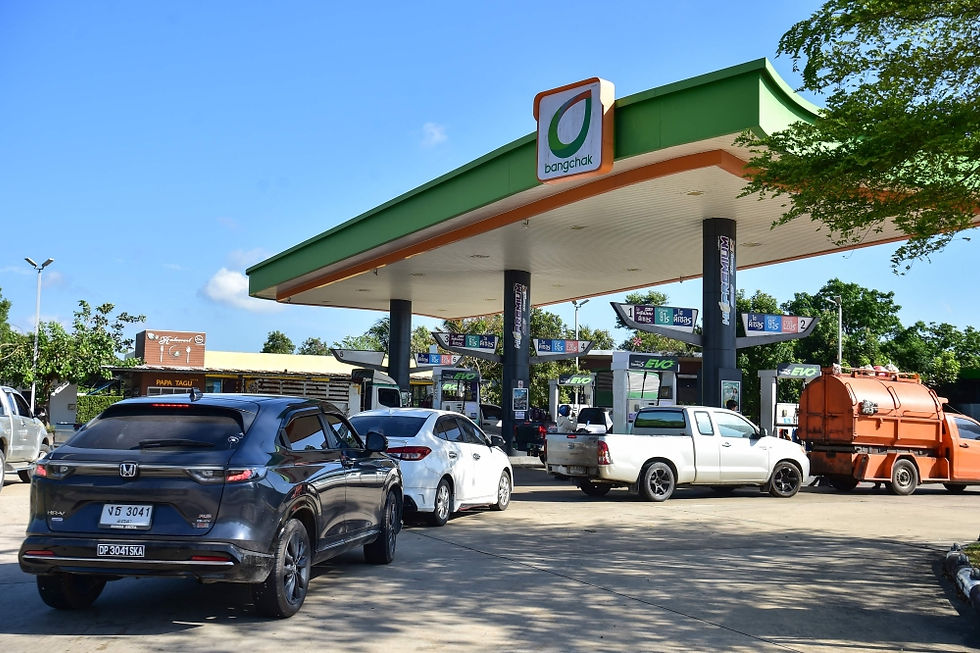
Whilst Europe faces remarkable increases in gas prices, it is Asia which is most damaged. As a result of the Persian Gulf’s location, close to China, India, Japan and the rest of southeast Asia, around 80% of the continent’s oil transports through the Strait of Hormuz. Understandably, a Western audience could sigh at the word, but because of the continent’s integral part of the global economy, they really shouldn’t.
Since 1 March, Thailand has banned exports of refined oil. To secure domestic oil supply and prevent shortages, this means that no oil will leave the nation, unless it is headed to Myanmar or Laos. The country will rely on its coal and hydroelectricity to power itself, and exports from Western countries such as the US.
Since 7 March, Myanmar has banned half of private vehicles from driving at any given time. Its government, now led by the military as a result of a coup d'état which deposed democratically elected officials, has introduced an odd-even system for cars. Cars with even-numbered registration plates are only allowed to drive on even-number days, whilst cars with odd-numbered plates may only drive on odd-numbered days. Given 90% of Myanmar’s oil is imported, obviously much of that from the Persian Gulf, Burma’s junta says that this is to prevent fuel shortages. This adds another layer of turbulence to an already chaotic nation which has endured a civil war for the past 5 years.
Since 9 March, Filipino civil servants have begun a four-day work week. Oil prices in the Philippines have increased to their highest level in years, because the country net-imports its oil.
Some of the biggest economies, China, India, Japan, and South Korea, import the overwhelming majority of their oil and liquified natural gas from the Gulf. For China, it’s mobile phones; for India, it’s textiles and food; in Japan, cars; in South Korea, cars and technology. All of these items rely on oil and gas, whether it be to heat factories, produce material, or fuel cars. Given the previous countries depend on Gulf oil, which will surge in price, so too will the price of fundamental goods in the West. Therefore, inflation will rise in the US and Europe.
Fundamentally, considering we live in a world of interconnection in an era of globalisation, we cannot ignore Asia. We cannot ignore that the oil which assists in the manufacture of the products we use on a daily basis can no longer be consumed. It is likely that restrictions implemented by Asian governments will spread across the continent, and in many cases harshened. Regardless, a period of deep economic and inflationary trouble for the ⅗ of humans who live in Asia- or 4.7 billion people- is on the horizon.
Why the US and Israel Should Withdraw
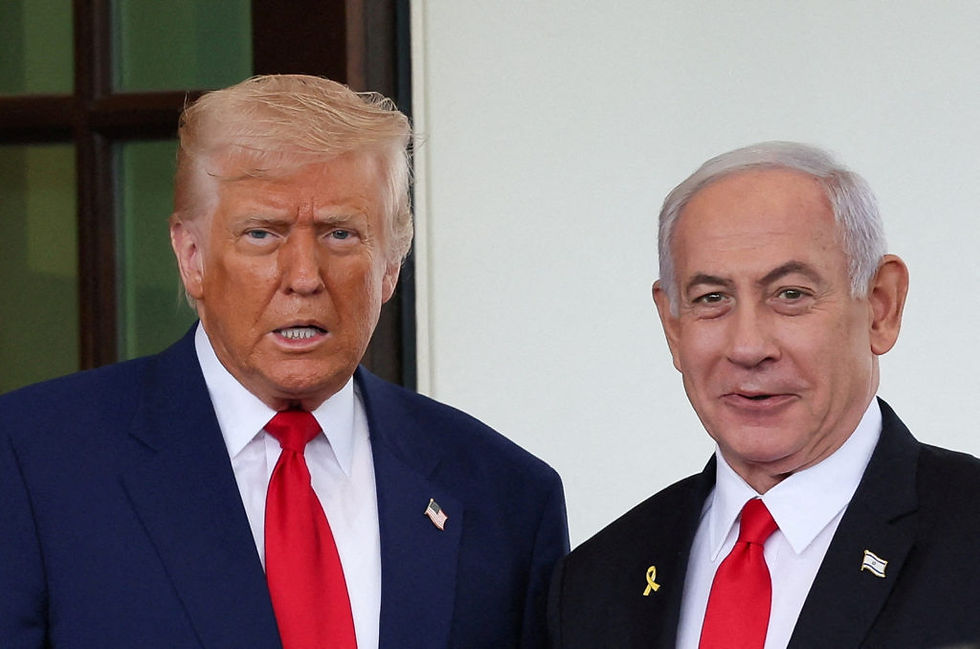
Conversation about the conflict in Iran is predictably doom and gloom. There is little positivity espoused by the media, or in talks among private individuals. This was ruthlessly epitomised by the former John Lewis boss Sharon White’s appearance on the BBC’s Sunday morning political show, BBC with Laura K, last Sunday. She spent an hour fearing the worst about how this oil shock can only get worse.
There is one way for this conflict to end: US and Israel stop their attacks on Iran and Lebanon, agreeing that Iran has the right to defend itself, payment of reparations and international guarantees against future aggression. That is not my proposal- rather it is that of Iranian President Masoud Pezeshkian. We know that Iran can be willing to end its strikes in the Middle East, because Pezeshkian also announced that last week. Whilst agreeing to Iranian demands may seem to embolden them, the US and Israel must elevate themselves from the economic turmoil they have established, whilst creating frameworks for dealing with the future of global trade, Iranian politics and international stability.
I think that a liberated Iran can be very possible if the US and Israel stop their attacks. A senior fellow at the Atlantic Council- a leading international security think tank- thinks that regime change can happen when you combine hitherto military action with mass protests, whilst the Center for Strategic and International Studies- a political research think tank- says that regime change remains a possibility.
Whilst a liberated Iran is important for global stability and morality, the war is a disaster. Globally, a cost-of-living crisis- originating in supply chain shortages as a result of COVID and energy difficulties as a result of the Russian invasion of Ukraine- remains at the centre of concerns of citizens. Whether we like it or not, oil performs a significant role in our livelihoods, and so do other products from the Middle East- plastics and farming fertiliser. Crude oil prices have increased by 50%, while prices of other oils and goods also surge. Therefore, the cost of everything, I stress everything, will increase- from airplane tickets to the price of bread, and families and businesses from New Delhi to Newcastle will get crushed. In the poorest countries, people will suffer and starve. This can be resolved by the US and Israel accepting that a regime will not be toppled, rather permanently damaged and on the verge of collapse, and agreeing to Iranian demands.
*
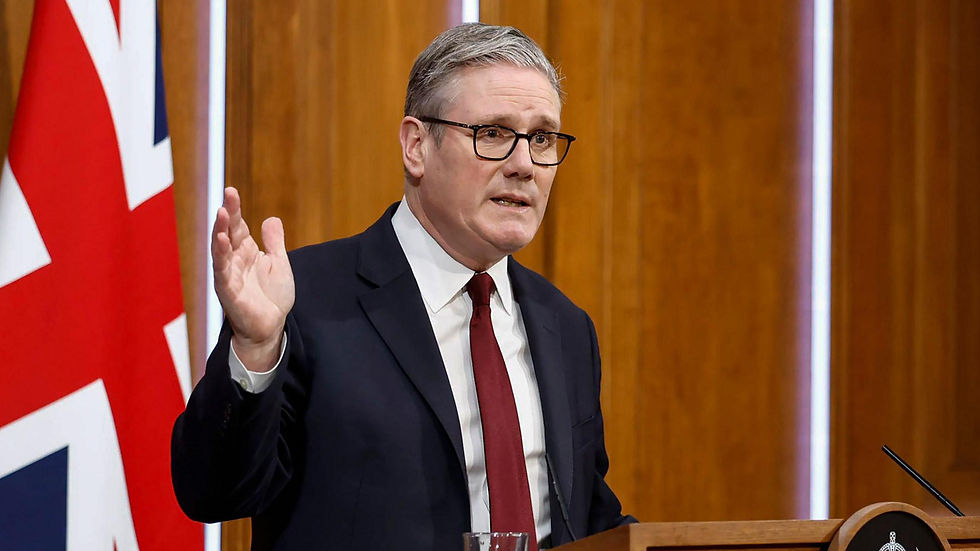
Since beginning the writing of this article, the United Kingdom has accepted the United States’ request that it can use British bases to strike Iranian locations which are striking the Strait of Hormuz. This shows that Keir Starmer, who initially sounded principled in Chapter One of this conflict, has no true beliefs or ideas. If Starmer has done this to please Donald Trump, that is nonsensical. Trump will only speak favourably of Europe if they agree to fully joining the United States in their attacks. My question to Starmer is this: why?
Starmer’s agreement to offensive strikes suggests Downing Street’s first unpopular move of this conflict. YouGov polling suggests that the War in Iran is opposed by a net of 21 percent of Britons, and until today, Starmer had stuck to his core beliefs as a socialist human rights lawyer, ensuring that the UK would not do a historically unpopular Iraq-style support of the US in Iran.
This is considerably disappointing, because Starmer seemed somewhat truly against the War- but his decision to allow the US to strike from British bases shows his true colours: he has none. Perhaps this will continue to sink the centrist Prime Minister’s approval ratings- already squeezed at minus 54% approval from all sides of the political spectrum.
One position the UK government has got correct is using this conflict to advocate for the transition to renewable energy. This conflict would likely look much more palatable if the world ran on wind turbines than LNG.
President Donald Trump is the only individual who wields the power to end this devastating conflict, so I have one word for him: withdraw.


One day Trump will find out that he is all alone, unfortunately for all Americans, regardless of their politics, the damage done to their reputation by this draft dodging, serial bankrupter and xxxx fiddler will never recover. Americans, if you are reading please stay away from Europe this summer, find somewhere else for your vacation. We don't need you. You are all complicit in this, how the hell did the sensible ones among you allow this to happen? You have some serious questions to ask yourselves. Could you have done more to avoid this? What were you thinking to allow this buffon to govern your country? As a keen follower of the World Cup I will be boycotting it thi…
Surely in this case the art of diplomacy is the best route rather than the art of war.
Well written and balanced article. The conclusion to the article is the only logical conclusion to this conflict.